Continuity
Series Continuity: The Complete Guide
Series continuity is the unbroken agreement of every fact across every book. It holds in Book 1 because you remember it all, then breaks as errors slip in.

StoryHelm Learn
The Series Continuity Library
Practical guides for the books you’ve written
and the ones to come.
The Series Continuity Library
Your reading list
102 guides in this collection
Continuity
Series continuity is the unbroken agreement of every fact across every book. It holds in Book 1 because you remember it all, then breaks as errors slip in.
Canon
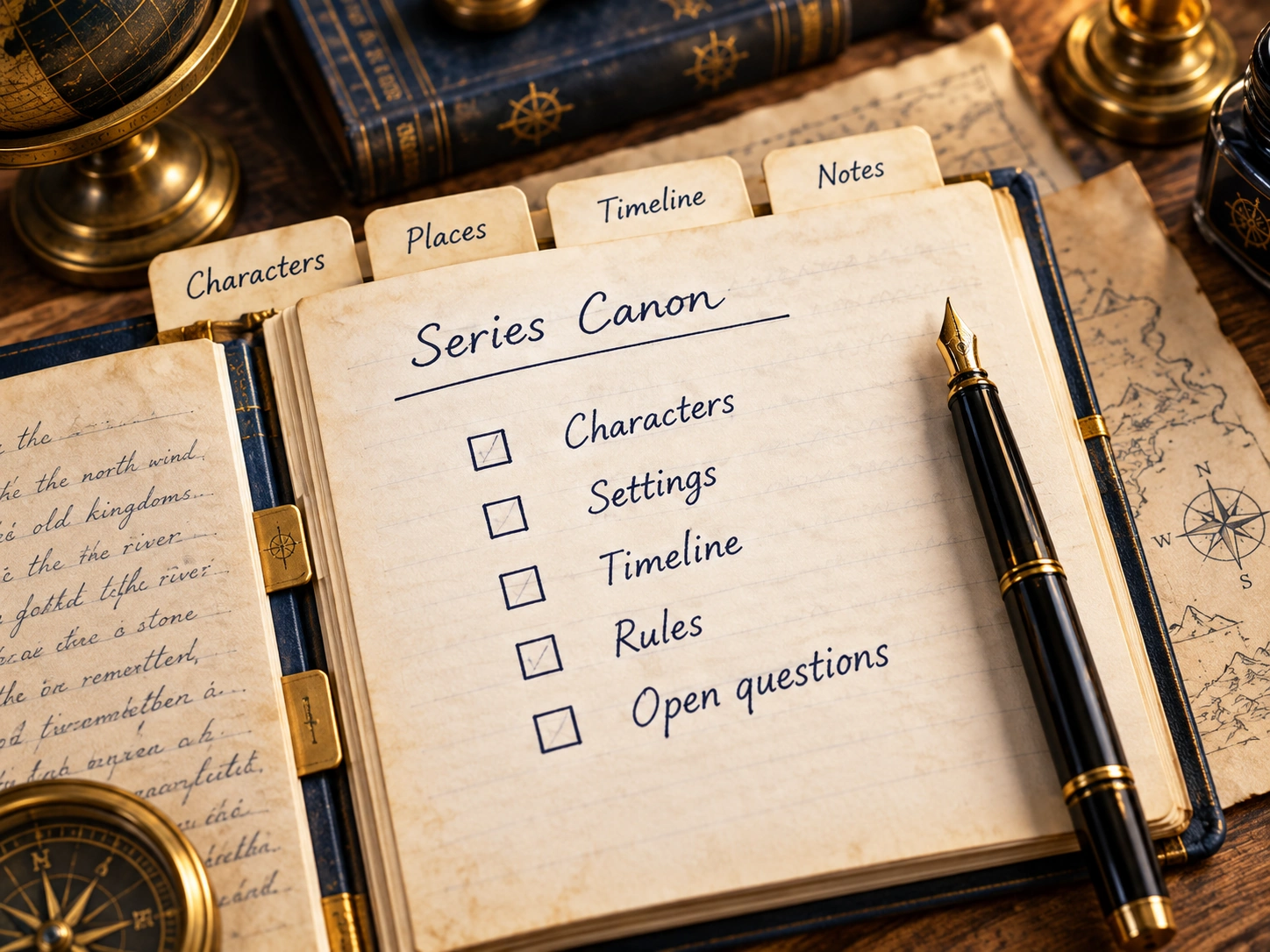
How to write a series bible for a multi-book series: what to record, how to keep it true to the books you wrote, and a free template to start from.
Continuity
Series craft is the structure, foreshadowing and voice that must hold across every book of a saga. Learn it through StoryHelm's 19-analysis Full read.
Publishing
Selling a series turns on read-through. The indie author's manual for continuity, the quality gate and the launch materials that sell the next book.
Canon · Continuity
Compare 10 tools series authors use, from Scrivener and Plottr to Sudowrite and AutoCrit, by what each is built to do: draft, organize or check continuity.
Continuity
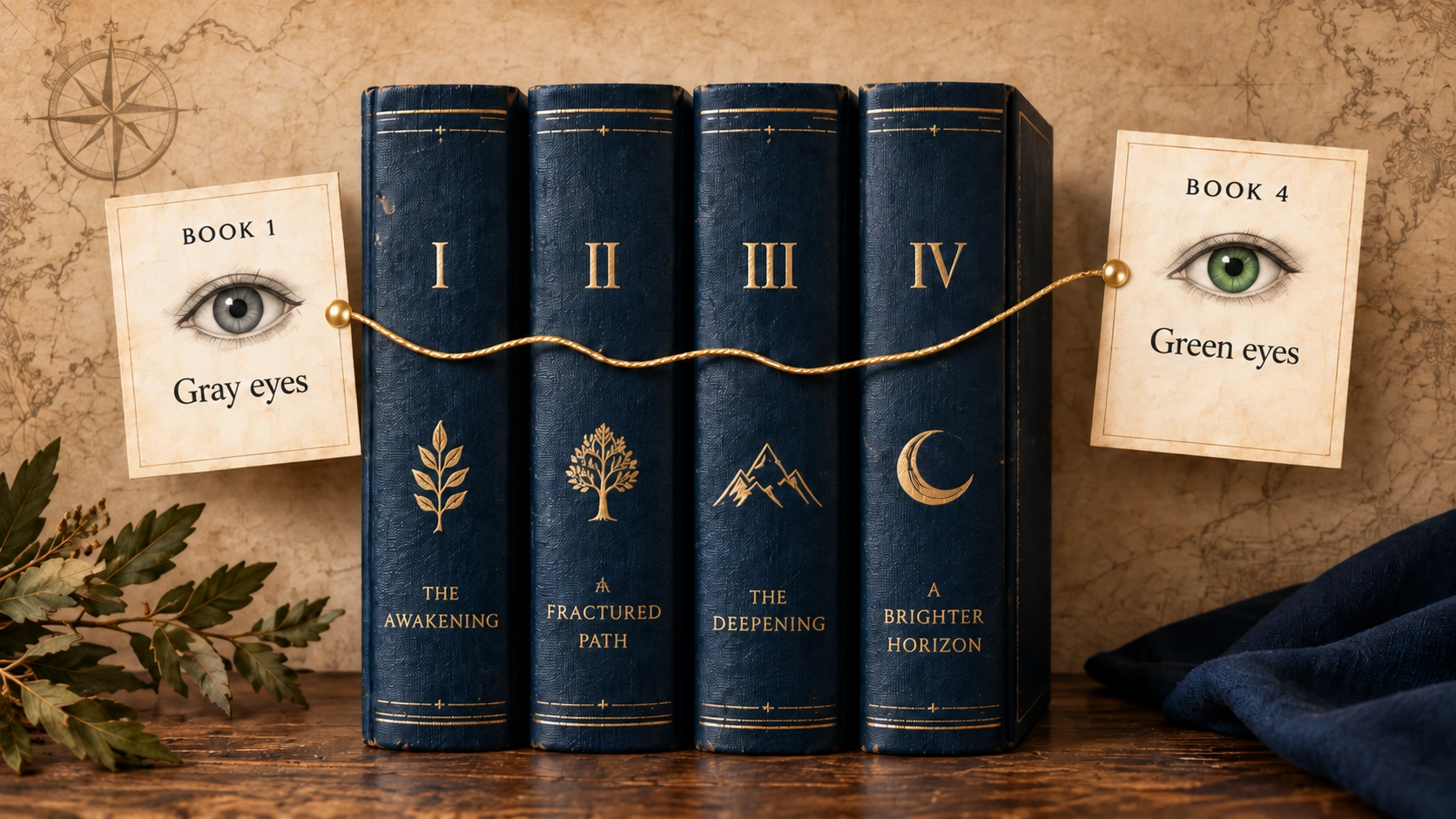
A minor character's name and eye color changed between Book 2 and Book 5 because no author holds a series in memory. What StoryHelm catches, and what not.
Continuity
Keep continuity across every book: build one record from the books you've finished, check each new book against it, audit the backlist. A 5-step method.
Canon
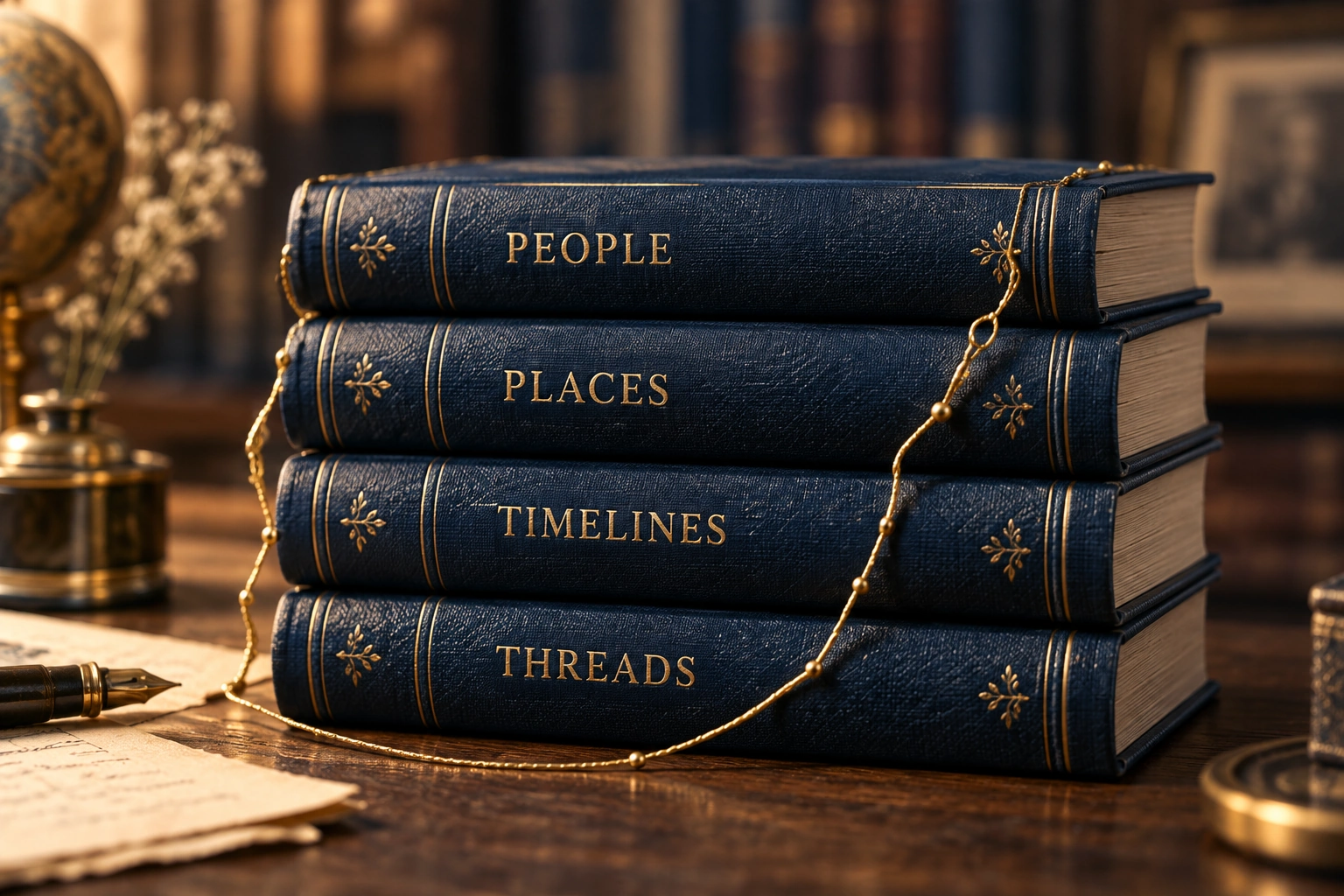
A story bible is the structured reference that records everything true about your fiction, so every chapter and every book agrees with what came before.
Continuity
The Coherence Guardian is the continuity check in StoryHelm's Full read: it reads one book against its Canon for timeline, trait and place contradictions.
Continuity
Continuity errors readers catch in a book series: name and trait drift, timeline slips, unpaid setups, voice drift and world-rule breaks, with a real case.
Canon
A hand-kept story bible is a second manuscript you'll abandon by Book 3. Extract your series bible from the books you wrote, and keep it current.
Continuity
A series continuity audit is one systematic pass over every book in a series, surfacing cross-book contradictions ranked by severity with the exact book.
Continuity
Continuity checkers compared for series authors: what each reads, whether it compares books, and what it costs, from StoryHelm and AutoCrit to BookShaper.
Canon
A spreadsheet bible works for a book or two, then lags your manuscript, goes stale and never checks anything. StoryHelm builds and checks your canon.
Continuity
Write every word yourself and still get continuity and craft checks: StoryHelm reads and analyzes each book in your series and never drafts your prose.
Continuity
You can't catch contradictions across a four-book series by re-reading; recall blurs. Build a canon, diff every book against it, then triage and fix.
Continuity
Keep every character consistent from Book 1 on: names, fixed traits, voice, relationships and what they know. A tracking method, and what StoryHelm checks.
Continuity
Keep your novel's timeline straight: dates, seasons, elapsed time and 'years ago' references on one story clock, book to book, and what StoryHelm checks.
Continuity
Yes, within limits. What an AI continuity check reads, what it flags inside each book and between books, and where your judgment still decides.
Canon
A series bible records what's true across every book: characters, places, events, rules, timeline. How it differs from a story bible, and when to keep one.
Continuity
StoryHelm's Full read is AI manuscript analysis of each book: nineteen analyses check it against its own canon and return a severity-ranked verdict.
Publishing · Continuity
Before bundling a series into a box set, run one continuity audit across all books. Box-set readers binge and catch contradictions a staggered release hid.
Continuity
Every tool races to write your book. StoryHelm made one permanent choice: it reads your series and never writes your prose. That is the whole point.
Craft
Character voice drift is the slow, unplanned change in how a recurring narrator sounds across a series, until they no longer read like the same person.
Craft
The sagging middle is where intensity flattens and nothing changes. Why series middles drag, what pacing measures, and how to spot the plateau.
Craft · Continuity
The eye-color problem is the way tiny fixed facts about a character (eye color, a scar, a limp, handedness) quietly contradict themselves across a series.
Craft · Continuity
A magic or tech system cheats when it bends its own rules to escape a corner. Treat every rule you wrote as a ledger later books must balance.
Craft · Continuity
Across a series, elapsed time has to keep adding up: gaps between books, ages, pregnancies. When three years is really two, the arithmetic breaks quietly.
Publishing · Continuity
Before you upload Book N to KDP: a craft pass for continuity across the series, and a metadata pass for series order, also-by links, blurb and box set.
Publishing
A series revision is one pass across every book: build a canon, diff each book against it, rank findings by severity, and fix each in your own prose.
Continuity
Marlowe (Authors A.I.) gives one manuscript a developmental read. StoryHelm reads each book and compares what the books record. An honest comparison.
Continuity
Fictionary gives one book a deep scene-by-scene story edit. StoryHelm reads each book of a series and compares what the books record. An honest comparison.
Continuity
In Book 1 the wedding is in autumn after the harvest; a Book 3 flashback sets it in spring. How cross-book timeline drift forms and gets caught.
Continuity
A port city faced south in Book 2 and north by Book 5. How geography drifts across a series, and how to catch it before a map-drawing reader does.
Continuity
A duel scar earned on the left hand in Book 1 sits on the right by Book 4. Each page is internally correct; comparing what each book records can catch it.
Canon
A character bible that scales is a structured record of every character, extracted from the books you wrote and kept tethered to the prose.
Canon
Canon is StoryHelm's structured record of each book in your series: the characters, places, factions, items and events found in your manuscript.
Continuity
Plot DNA is StoryHelm's per-scene read of how a book moves: each scene's intensity and stakes, the tension curve they draw, and the filler scenes.
Canon
Story Elements is the StoryHelm feature that scans your raw, unstructured notes for names and proposes each one for you to file in your Story Bible.
Continuity
Thread coverage tracks which plot and character threads are set up and paid off across a series, so an early promise to the reader is not quietly dropped.
Continuity
An A to Z of the vocabulary StoryHelm uses to read your series, build your Canon, and surface where the story stops agreeing with itself.
Craft
A setup without a payoff is a promise a book never keeps. Record each setup, mark its payoff, and find the danglers across your series.
Translation · Canon
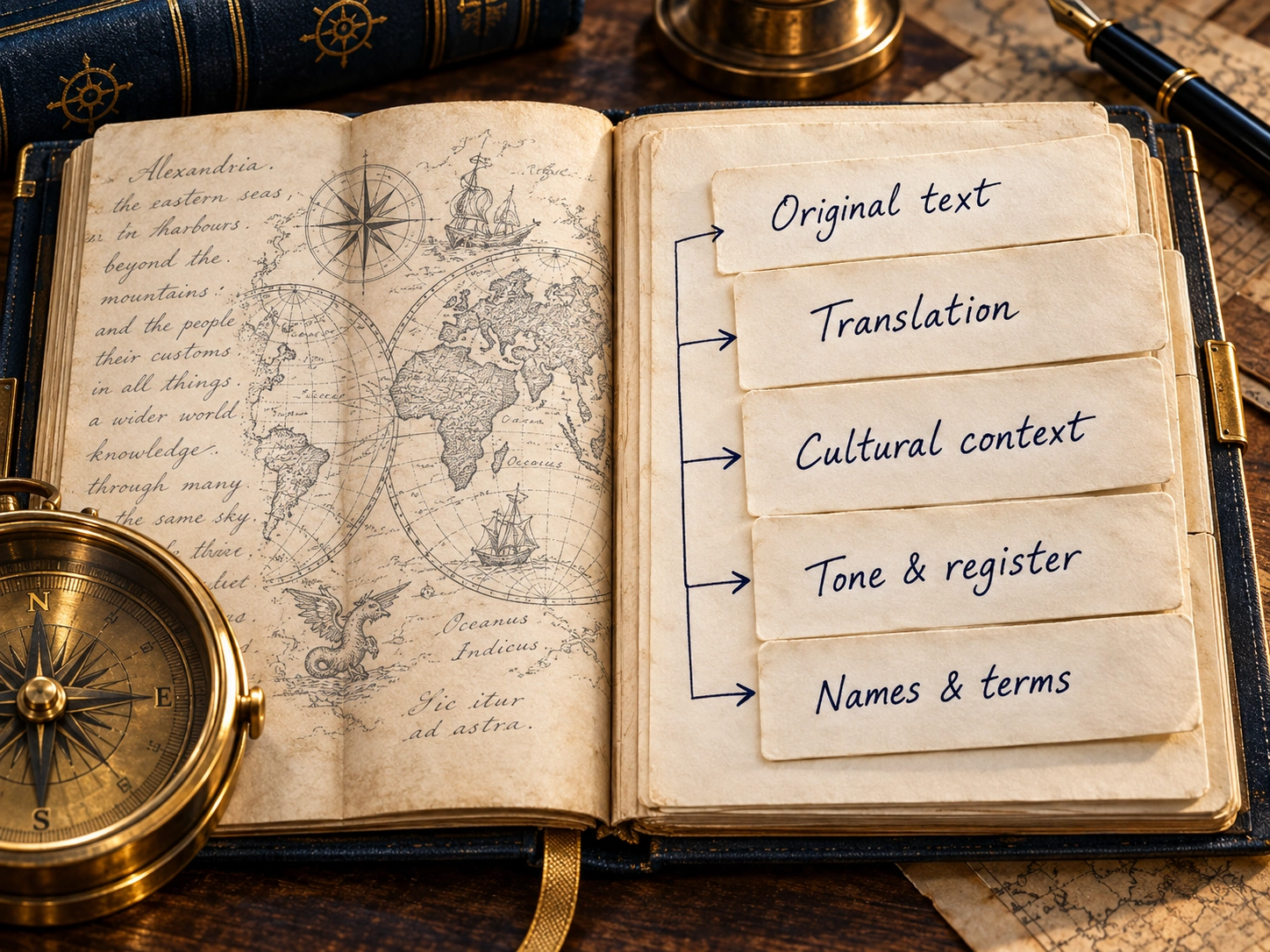
Translation is where a series quietly fractures. One entity canon of names, places and invented terms, applied to every volume, keeps it intact.
Continuity
BookShaper analyzes one book at a time. StoryHelm reads each book in your series and compares what the books record. Neither drafts your prose. Compared.
Canon
In NovelCrafter you keep the codex by hand and can draft with AI. StoryHelm builds a canon from each book you wrote and checks continuity. Compared.
Canon
The Series Atlas is the shared Canon and continuity layer across a series: every book's Canon in one place, with a cross-book check of details and dates.
Craft
The AI Beta Reader is a simulated, genre-aware first read of your manuscript that returns a reader's letter on what landed and where attention dipped.
Publishing
Ship Dock drafts a series author's launch materials from the analysis, for the author to review and edit: logline, comp titles, synopsis and pitch letter.
Craft
Filler Ratio is a Plot DNA metric: the share of scenes that score low on both intensity and stakes, StoryHelm's early signal a book is thinning out.
Continuity
A Genre Benchmark compares your manuscript against the typical shape of its genre: word count, pacing, and how early the hook and the stakes land.
Publishing
A query letter is the one-page pitch to an agent or editor: a hook, a paragraph on the book, and a bio. For a self-publisher, it is the blurb's skeleton.
Publishing
Comp titles are the recent books you name to position yours. For an indie series they set categories, ad targets and reader expectations from Book 1 to 6.
Publishing
A logline is the one sentence naming your protagonist, what they want and what stands in the way: the line your blurb, ads and series page are built on.
Translation
Translation Studio is StoryHelm's entity-aware translation: it machine-translates your manuscript with Canon names locked and terms tracked in a glossary.
Craft
A plot hole is a break in your story's own logic. How to find them in a novel, why a series breeds worse ones, and what an AI read can and can't catch.
Canon
AutoCrit is an editing studio with a Series Analyzer. StoryHelm keeps a canon for every book and runs a cross-book check you start. An honest comparison.
Canon
Fantasy series bible software that reads each book of your saga and, in a Full read, can flag magic-rule, world and character contradictions inside it.
Continuity
LitRPG continuity: StoryHelm reads each book in your series and, in a Full read, can flag scenes that break the skill and system rules that book set.
Continuity
StoryHelm reads each book of your series and, in a Full read, can flag where a scene breaks the advancement rules, realms or ability limits that book set.
Canon
Urban fantasy series bible, built from your prose. StoryHelm reads each book and flags masquerade and magic-rule contradictions within it.
Continuity
StoryHelm flags timeline and tech contradictions within each book, and the same event given a different year across books. For sci-fi sagas.
Continuity
Track clues and plot threads in a mystery series. StoryHelm reads your books and flags dropped setups, broken alibis, and timeline contradictions.
Canon
A practical story bible template for a fantasy series, the exact entities to track, plus how to keep it current from your prose instead of by hand.
Continuity
Managing continuity across a long fantasy series gets impossible by Book 3. Learn a method to pin canon early and check every book for drift.
Craft
An AI Beta Reader gives a genre-aware first read of your book with a reader’s letter. It reacts like a reader and never writes your prose.
Craft
Beta reader alternative: StoryHelm gives a genre-aware AI first read, and flags continuity and pacing breaks so humans see a cleaner draft.
Craft
Get manuscript feedback faster than beta readers. Run an AI first read and continuity pass tonight, fix the obvious, then send humans a clean draft.
Craft
A character tracker that fills itself from your books: StoryHelm records each character's traits, relationships and voice, book by book, so the arc shows.
Craft
Keep voices distinct: StoryHelm profiles each character’s dialogue in a book, shows which voices sit closest, and warns when two may blend.
Craft
See where your novel drags or rushes: Plot DNA scores every scene for intensity and stakes, flags filler, and charts each book's tension curve.
Canon · Craft · Continuity
Keep magic rules, geography, factions and lore straight across a series: a tracking method, and what a Full read can flag inside each book.
Craft
In a Full read, StoryHelm’s Sensory Audit scores each scene for the five senses and flags sight-heavy scenes where sound, touch, smell or taste are thin.
Craft
How to self-edit a novel series: a practical multi-book method, plus the continuity checks StoryHelm runs on each book and across a series.
Publishing
Developmental edit cost for a novel runs into four figures, and a series multiplies it. See what drives the bill and how to arrive cleaner and pay less.
Craft
Feedback on each book of your series, from continuity and pacing to voice and a beta read, by AI that reads your manuscript and never drafts your prose.
Translation
Can AI translate a novel? Yes, but not generic machine translation. Entity-aware, quality-scored literary AI preserves names across a series.
Translation · Publishing
Book translation cost: a human literary translator runs $10,000-$15,000 per language. StoryHelm renders a novel from $199/language, one-time, you own it.
Translation
DeepL and Google Translate are built for documents, not novels. A literary alternative locks your names, offers regional dialects, and scores each chapter.
Translation
Literary translation re-creates a novel’s meaning, voice, and effect in another language, not just its words, unlike literal or machine translation.
Translation · Craft
You can’t judge a translation in a language you don’t read. StoryHelm scores each chapter, back-translates every sentence and runs validation checks.
Translation
One language is many markets: Spanish splits 6 ways, Portuguese 2, Chinese 3. StoryHelm renders the regional dialect native to the market you sell into.
Craft
Crutch words are the fillers, pet adverbs, and signature words you repeat without noticing. How to find yours with real counts and revise them by category.
Publishing
Series read-through is the share of Book 1 readers who go on to Book 2 and beyond. How to calculate it from KDP sales and page reads, and what lowers it.
Publishing
Rapid release, quarterly, or a book a year: what each cadence buys you on Amazon, what it costs in continuity, and how to hold quality at any speed.
Publishing
Marketing is the hardest part of self-publishing for 78.5 percent of indie authors. A series author's way through: two channels, launch copy once.
Canon
Series canon is the one set of facts every book in a series must agree with. Where it comes from, what is checked across books, who decides what is true.
Continuity
A timeline is the order events happen, not the order readers meet them. Where timelines break across a series, and what StoryHelm checks.
Canon · Craft
Story branching lets you write a second version of a scene beside the one you have. How StoryHelm's Story Branches keeps your draft safe until you choose.
Continuity
In A Study in Scarlet, Watson's Jezail bullet hits his shoulder. In The Sign of the Four it is in his leg. A casebook on how a wound moves between books.
Continuity
The 12 continuity errors readers punish most in a book series: name drift, timeline math, resurrection errors, world rules and more. Free 4-page checklist.
Canon
A free, genre-neutral series bible template: characters, places, factions, items, events, rules and a master timeline. Print it or fill it in on screen.
Continuity
Plottr helps you plan a series and hand-build its bible. StoryHelm reads the books you wrote and flags where they contradict themselves. Compared.
Continuity
Aeon Timeline lets you build and see your story's timeline. StoryHelm reads your books and flags where the clock breaks. What each does for a series.
Continuity
Campfire gives you worldbuilding modules to build a world in. StoryHelm builds a canon from each book you wrote and checks it for contradictions. Compared.
Continuity
ProWritingAid works on sentences: grammar, style, pacing, rephrasing. StoryHelm reads for continuity across a series and never rewrites your prose.
Craft · Continuity
The resurrection error: something a story destroyed returns with no explanation. Why a series breeds it, a ledger that stops it, and what a read can flag.
Craft · Continuity
A knowledge ledger records who learned each secret, in which scene, and how. It catches premature knowledge and impossible ignorance. How to keep one.
Craft · Continuity
Head-hopping, a chapter in the villain's head, a slip into present tense: how to log every scene's POV and hold the line across a series.
Craft · Continuity
Uncles who become cousins, sergeants who outrank lieutenants: how to track kinship and rank per book, and what a read can flag.
Continuity
Romantasy keeps two promises: the romance and the magic. What slips across a series, and what StoryHelm checks in each book and between books.
Canon
Series bible software that builds a canon from each book you wrote: characters, places, factions, items and events, gathered in one Series Atlas.
Craft
In a Full read, StoryHelm checks each book against its own canon and flags breaks in its logic, like a clue used too soon. What it can and can't catch.
Start here · Illustrative example
One character. Two eye colors.
A detail that slipped.
Learn to trace it to the source.
8 min read · A continuity example
Read the guideNeed help using the app?
Contact support